
What if I told you "human-grade" was bullsh*t?
Mar 20, 2026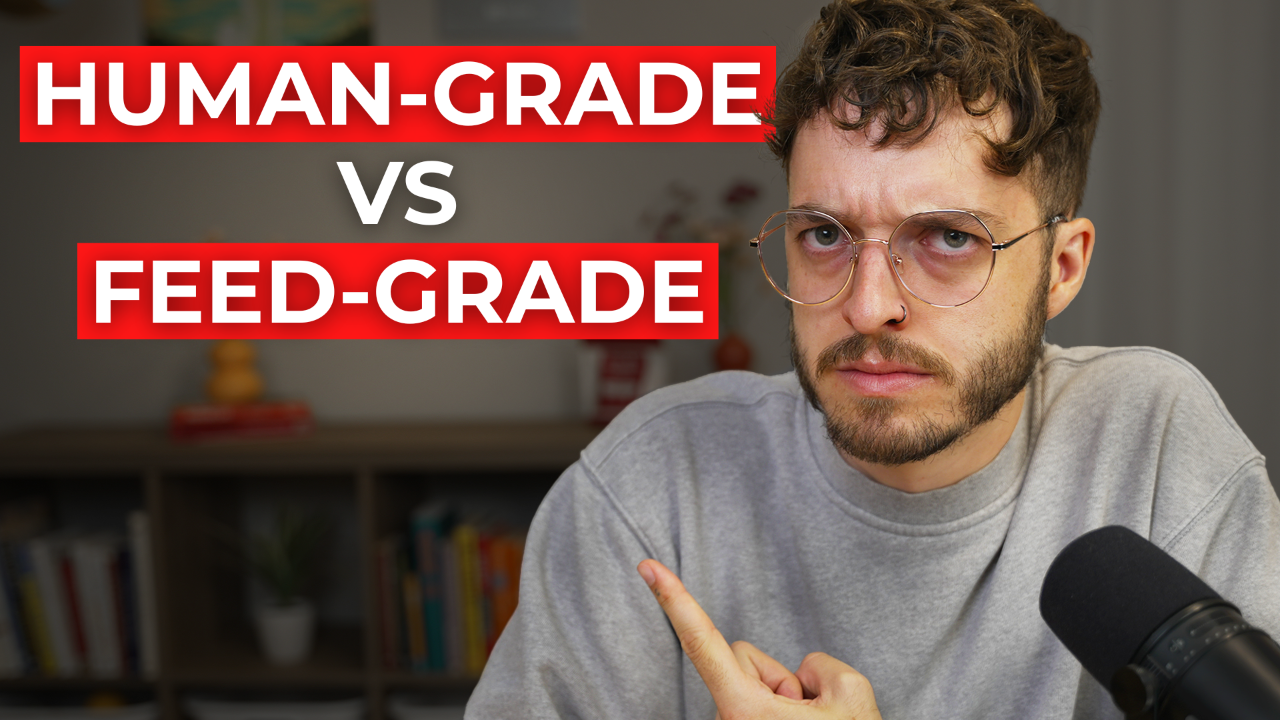
If you’ve shopped for dog food in the last few years, you’ve probably seen this term everywhere. Human-grade. It’s on the homepage. It’s on the bag. It’s in the Instagram ads. It’s the thing that’s supposed to make you feel like you’re choosing the better option for your dog. And I get it. When I first heard it, I thought the same thing. “Oh, this food is made with ingredients that are good enough for me to eat? That has to be better than whatever’s in regular dog food.” But when I actually dug into what “human-grade” means, and more importantly, who’s verifying whether it’s true, the whole thing kind of fell apart. So let’s talk about it. What “Human-Grade” Actually Means I dug into what it actually means with a veterinary nutritionist, and the short answer is that it’s mostly bullshit. Not because the concept doesn’t exist. But because it’s way more about regulation and paperwork than it is about quality. Think of “human-grade” as a chain-of-custody promise. An ingredient is only considered “human food” if it was originally intended for human consumption, handled under human food controls, and tracked as such through storage, transport, and documentation. The second a supplier diverts that ingredient to a pet food company, the regulatory oversight changes. From that point forward, it falls under feed regulations. It gets inspected under animal food standards. And it legally can’t be represented as human food anymore. Even if it’s the exact same ingredient. Same quality. Same nutritional profile. Same chicken breast from the same farm. So what “human-grade” really describes is the regulatory pathway and chain of custody. Not nutritional superiority. It does not automatically mean safer.It does not automatically mean more nutritious.And it definitely does not mean better formulated or better tested. That was a big “wait, what?” moment for me. OK But Who’s Actually Checking? This is where it gets really fun (not). AAFCO, which sets the standards for pet food labeling in the U.S., says that for a food to be considered human-grade, the company has to meet the criteria of a specific federal statute: 21 CFR Part 117. Sounds official, right? But right under that, AAFCO also says that human-grade pet food claims are voluntary. And that no feed control official, state or federal, can mandate enforcement. Let me say that differently. Nobody is required to verify it. Nobody is showing up to check. Nobody is holding them accountable. Unless the company voluntarily enrolls in the USDA’s verification program and pays for someone to come audit them, the claim is basically on the honor system. So when a brand plasters “100% Human-Grade” across their entire website, you actually have no way to confirm whether that’s true or not. And I tend to assume that big claims without supporting evidence aren’t true. Some Brands Show Their Work. Most Don’t. Here’s where things get a little more nuanced, because not every brand treats “human-grade” the same way. Some companies throw it around like confetti and leave it at that. But others actually try to explain what they’re doing. When I was researching The Farmer’s Dog for a review we’re doing, I found a page on their site that breaks down what they mean by “human-grade.” They claim their facilities hold a USDA Grant of Inspection with inspectors on-site. They claim they test every batch of food for harmful microbes and pathogens. And they claim they sanitize after every single cooking run to reduce the risk of cross-contamination. Now, I can’t personally verify all of that. But the fact that they put specific, falsifiable claims on their website is a completely different energy than just slapping “human-grade” on the homepage and calling it a day. Compare that to Spot & Tango, who uses “100% Human-Grade” all over their site but doesn’t give you much to go on beyond the claim itself. There’s a massive difference between explaining what you’re doing and just telling people what you are. Here’s What Actually Matters More This is the part that really shifted my thinking. A feed-grade manufacturer with strong safety protocols and aggressive testing might actually have tighter controls and more predictable outcomes than a company riding the “human-grade” label with minimal verification. “Human-grade” food still doesn’t tell you: How often they test the finished product Whether the nutrients on the label actually match what’s in the bag Who formulated the recipe and what their qualifications are What happens when something goes wrong Those are the questions that actually matter. And none of them have anything to do with whether the food is “human-grade” or not. So if a brand leads with “human-grade” as their biggest selling point but can’t answer basic questions about their formulation, testing, and food safety protocols? That tells you something. And if a brand doesn’t claim to be human-grade but has board-certified nutritionists on staff, tests every batch, and can walk you through their entire safety process? That tells you something too. What I Want You to Take Away From This I’m not saying human-grade is meaningless. The concept exists for a reason, and when a brand actually backs it up with real transparency, it can be a good indicator that they take manufacturing seriously. But it’s not the flex that marketing makes it out to be. And it’s definitely not the thing you should be basing your entire dog food decision on. Now, if all of this has you thinking “OK well what if I just made the food myself so I don’t have to wonder about any of this,” I actually have something for you. We built our Single-Protein Recipe Bundles with a veterinary nutritionist. Five recipes per bundle, grain-free and grain-inclusive options, and every single one is formulated to be complete and balanced for adult dogs. You’re buying the ingredients yourself from a grocery store. You know exactly what’s in it because you’re the one making it. And the recipes were formulated by someone with the training to get the math right. 🚫 Get the Grain-Free Recipe Bundle here 🌾 Get the Grain-Inclusive Recipe Bundle here Talk soon, Bryce
