
The (Unsponsored) Freshpet Dog Food Review
Mar 16, 2026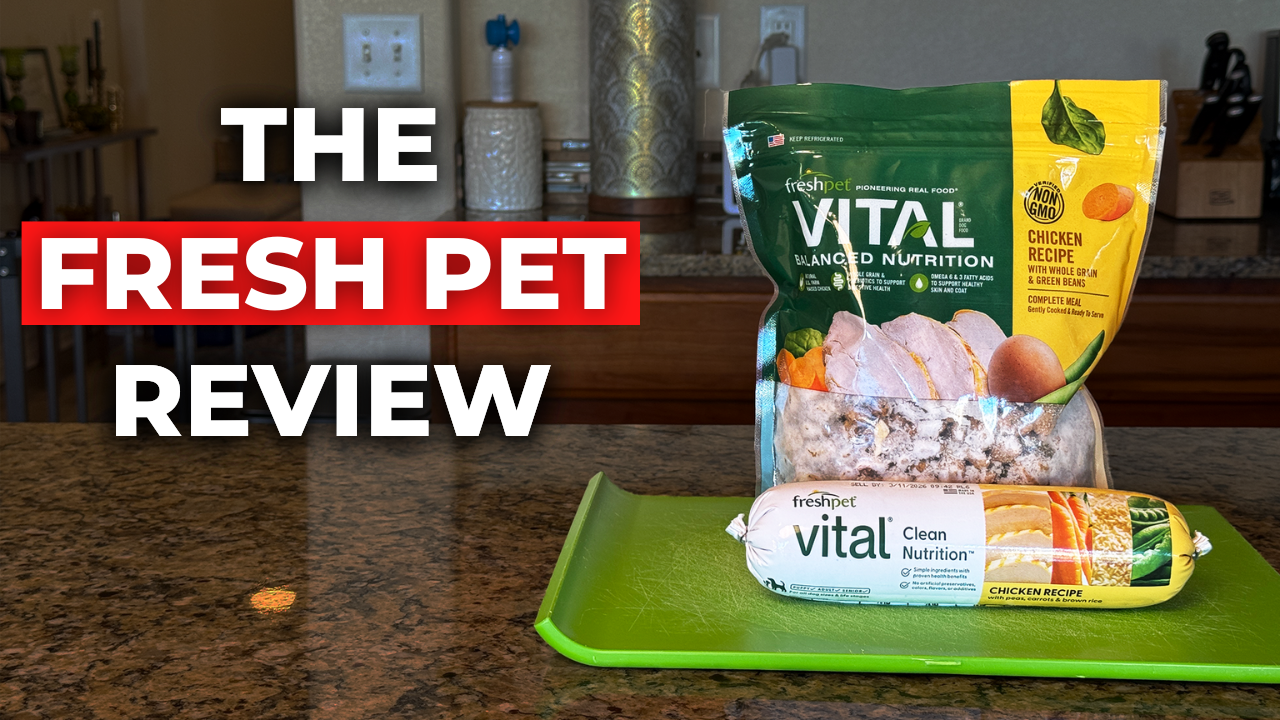
A few years ago, foods like Freshpet felt like an obvious upgrade from conventional kibble.
Fresh.
Refrigerated.
Found in the grocery store instead of the pet food aisle.
Compared to kibble, it felt closer to real food—and for a long time, that alone was enough to put it in the “better by default” category for us.
But as we’ve learned more about formulation, nutrient balance, and what actually predicts long-term health outcomes, we’ve started reviewing fresh foods with the same standards we apply to everything else.
So here’s our unsponsored review of Freshpet.
(Learn to judge and review food like the experts with the Dog Food Evaluation Guide)
What Freshpet does well
Formulation & credentials
Freshpet does something many fresh brands don’t: they publicly identify who formulates their diets.
Their foods are formulated by veterinarians, board-certified veterinary nutritionists, and PhD food scientists, with names listed on their website.
That’s awesome.
It means formulation decisions are traceable, accountable, and grounded in training specific to animal nutrition—not just ingredient philosophy.
Quality control & manufacturing
Freshpet owns and operates their own kitchens in Pennsylvania and Texas.
Those facilities maintain third-party Safe Quality Food (SQF) certifications and are overseen by both the FDA and APHIS (Animal and Plant Health Inspection Service).
They also report extensive testing, including:
-
Ingredient identity and traceability
-
Vitamin and mineral profiles
-
Microbiological safety
-
Contaminants and supplier verification
That level of oversight is not universal in the fresh food space.
Feeding trials & research
Freshpet does conduct feeding trials and publishes research through their veterinary professionals hub.
While some trials are small and not always diet-specific, the data is accessible and clearly documented.
That already puts them ahead of many brands that rely solely on formulation claims.
How this lines up with WSAVA guidelines
When we evaluate foods now, we loosely use the WSAVA nutrition guidelines as a framework—not because they’re perfect, but because they emphasize accountability over marketing.
Freshpet checks several important WSAVA boxes:
-
Formulation by credentialed veterinary nutritionists and PhD food scientists
-
Owned manufacturing facilities with third-party audits
-
Documented quality control and ingredient testing
-
Accessible feeding trial information
Where things become less clear is how well individual recipes fit most dogs long-term—especially given a few concerning aspects that we’ll right now.
Where concerns start to show up
Macronutrient balance
Looking at one of their most popular recipes—the Roasted Chicken with Garden Vegetables—the dry matter profile looks like this:
-
Protein: ~37.5%
-
Fat: ~28%
-
Fiber: ~1.6%
For many adult dogs, that fat level is higher than ideal long-term, especially for dogs that are sedentary, prone to weight gain, or have a history of GI issues.
This type of profile may work well for some dogs—but not most dogs.
Life-stage targeting
Many Freshpet diets are labeled for all life stages or marketed broadly toward adult dogs with digestive or skin concerns.
Higher-fat, higher-calorie diets paired with general targeting increases the risk of overfeeding without pet parents realizing it.
The food isn’t “bad.” It’s just not very forgiving.
Marketing clarity
Freshpet generally avoids extreme fear-based messaging, which we appreciate.
However, they do rely heavily on broad claims like “better digestion” or “more energy” without clearly explaining why or for whom those benefits apply.
That lack of specificity makes it harder for pet parents to know whether a given recipe actually fits their dog.
Cost & practicality
For a 50-lb dog, feeding this Freshpet recipe costs roughly $108 per month based on current grocery store pricing.
That’s more affordable than many fresh-frozen brands and widely accessible, but it comes with trade-offs.
Final thoughts
Freshpet sits in a gray area for us.
They do many things right: credentials, quality control, transparency, and research access.
But the consistently high fat levels and broad life-stage formulations make it hard for us to recommend Freshpet as a long-term, default food for most adult dogs.
Freshpet has real potential.
With tighter nutrient ranges and clearer targeting, it could easily move into our “go-to” category.
So it’s a maybe. Not a yes, which sort of makes it a no… for now.
Thanks for reading, and tell your pets I said hello ☺️
Bryce
P.S. If reading this made you realize how hard it is to actually evaluate pet food beyond marketing claims, that’s exactly why we built the Dog Food Evaluation Guide.
As a Substack reader, you get 20% off with code STACK at checkout.
