
A new study says your dog's food is full of heavy metals
Mar 16, 2026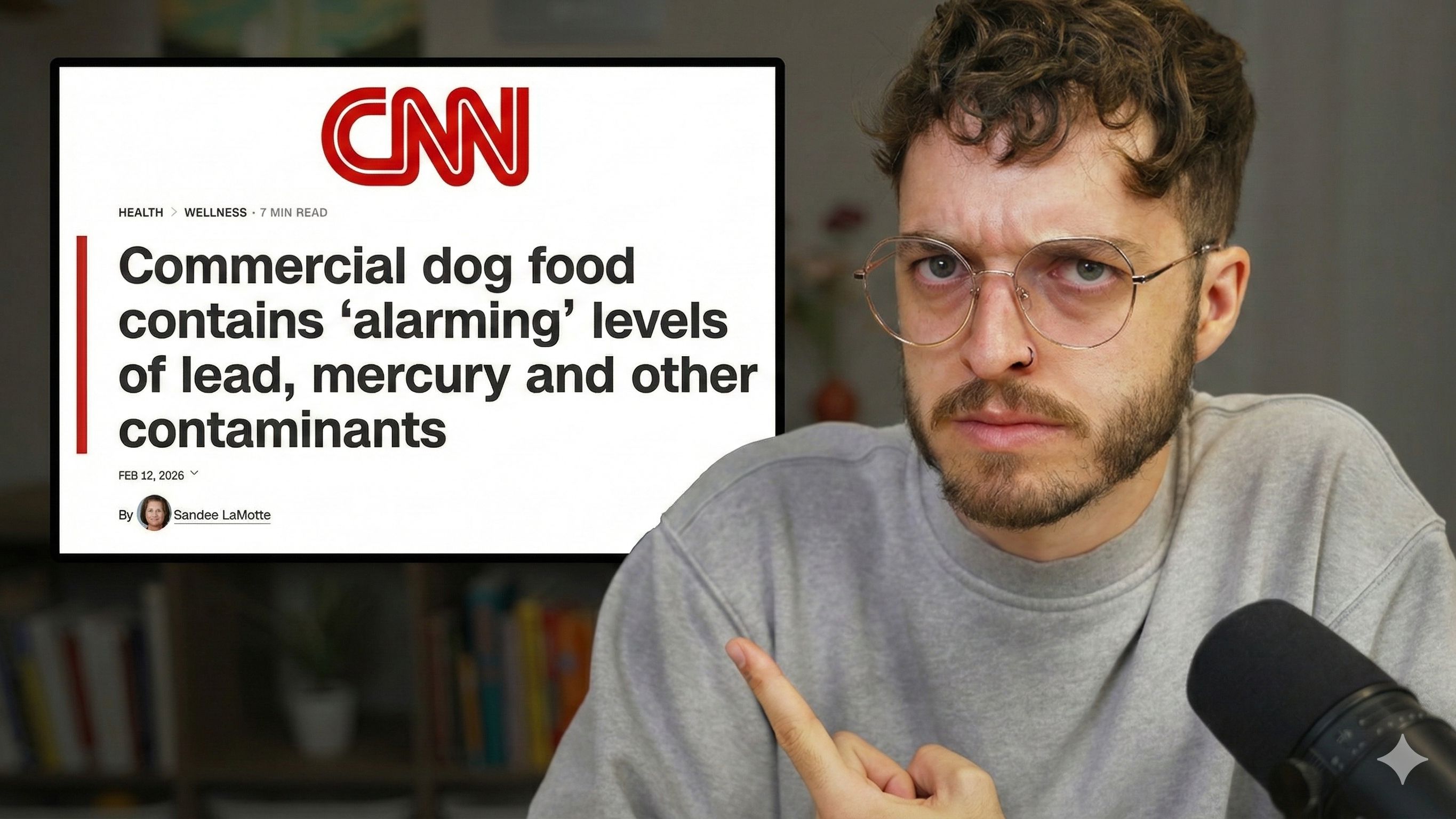
If you’ve been on the internet the last few days, you’ve probably seen the headlines.
“Commercial dog food contains ‘alarming’ levels of lead, mercury and other contaminants”
CNN picked it up.
Social media ran with it.
And now pet parents everywhere are panicking about what’s in their dog’s bowl.
The study came from the Clean Label Project, a nonprofit that tests consumer products for contaminants.
They tested 79 dog foods and found heavy metals in basically all of them.
And yeah, that sounds terrifying.
But when you actually look at the data, the story is a lot less scary than the headline wants you to believe.
Let’s walk through it.
The levels they found are all below the safety limits.
AAFCO sets maximum tolerable levels for heavy metals in dog food.
Here’s how the highest samples from the study actually compare:
-
Arsenic: highest sample was 785 ppb. The safe FDA limit is 12,500 ppb.
-
Lead: highest sample was 1,576 ppb. The safe AAFCO limit is 10,000 ppb.
-
Cadmium: highest sample was 247 ppb. The safe AAFCO limit is 500 ppb.
-
Mercury: highest sample was 55 ppb. The safe NRC limit is 200-500 ppb.
Not a single heavy metal came close to the maximum allowed in pet food.
That’s a pretty important detail to leave out of the headline.
The comparison to human food makes no sense.
This is the part that really gets me.
The study compared heavy metals in dog food to “human consumables” and found that dry dog food had 5-12x more heavy metals.
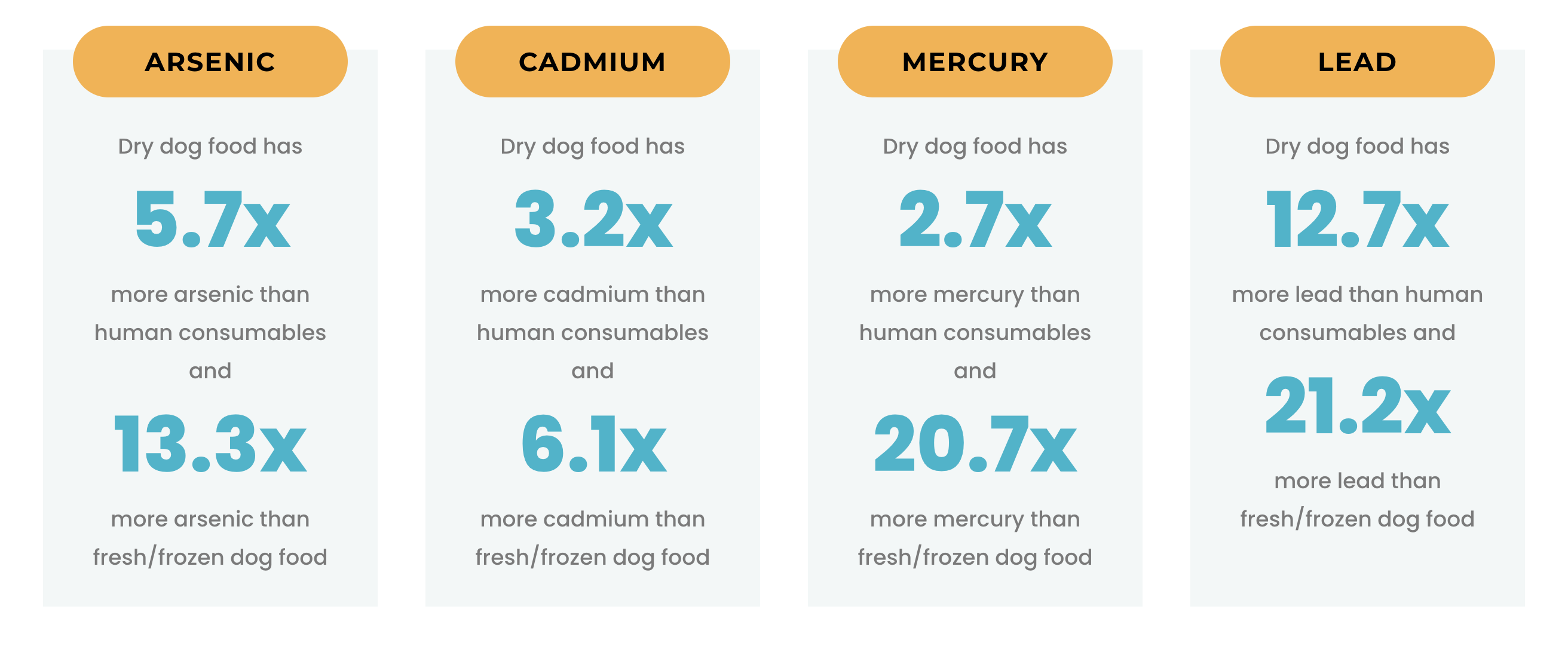
Sounds horrible, right?
Except here’s what they’re actually comparing:
-
Dog food = a complete and balanced meal designed to be the only thing your dog eats all day
-
“Human consumables” = 3,280 random foods, beverages, and supplements tested over ten years (things like fruit juice, protein powder, vitamins)
That’s like comparing the lead levels in your entire dinner plate to the lead levels in a glass of orange juice and being shocked that the dinner plate has more.
Of course it does! It’s an entire meal.
They didn’t account for the ingredients driving the numbers.
Certain ingredients are naturally higher in certain heavy metals:
-
Fish and seafood carry more mercury and arsenic
-
Rice absorbs more arsenic from the soil than other grains
-
Organ meats concentrate more lead
The Clean Label Project knows this. They literally say it in their own report.
But then they don’t control for it at all.
In the dry food category, 7 of the diets had salmon as a major protein source.
In the fresh/frozen category? Zero fish-based recipes.
So when they say dry food has 20x more mercury than fresh food, a big chunk of that difference might just be because one group had fish in it and the other didn’t.
That’s not a safety crisis. That’s a math problem.
They didn’t use dry matter basis either.
This is a nerdier point, but it matters.
When you compare different types of dog food (kibble vs fresh vs raw), you have to account for moisture content:
-
Kibble has about 10% moisture
-
Fresh food can be 60-80% moisture
The standard way scientists compare food types is called dry matter basis. It levels the playing field.
The Clean Label Project didn’t do this. They reported everything by serving size, which makes the comparison between food types unreliable from a scientific standpoint.
So who benefits from this framing?
Here’s the thing I keep coming back to.
The study’s conclusion is basically: dry food is full of heavy metals, fresh food is way cleaner.
And the only dog food brand that is Clean Label Project certified? Freshpet.
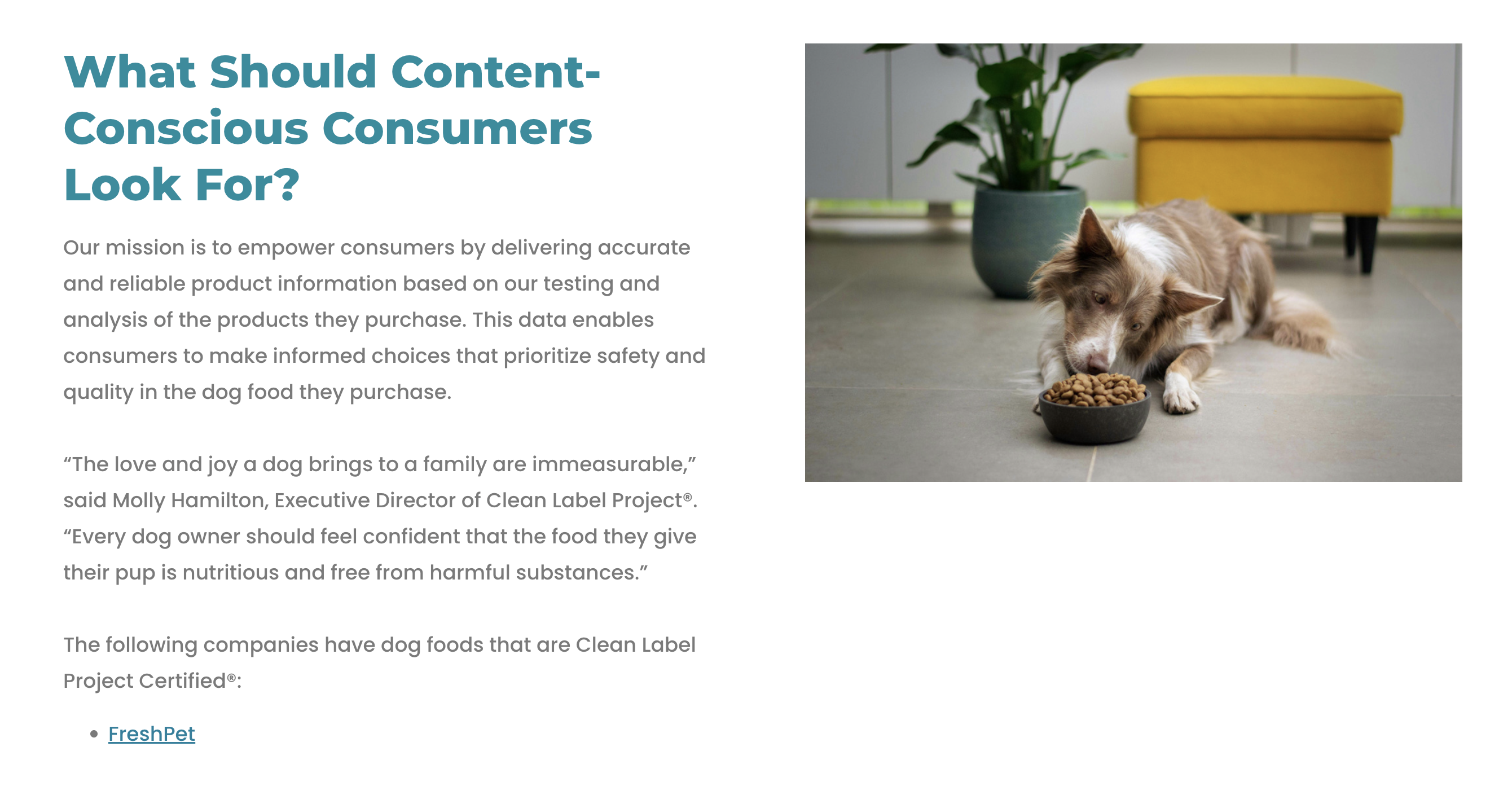
I’m not saying there’s something shady going on.
But when the entire study is framed in a way that makes fresh food look dramatically safer, and the only certified brand is a fresh dog food company, that’s worth noticing.
So should you be worried?
Heavy metals exist in food.
All food.
Yours and your dog’s.
That’s not new information. It’s a reality of how food is grown, raised, and processed on this planet.
The question isn’t “does my dog’s food have heavy metals in it?” It does.
The question is “are the levels dangerous?”
And based on the actual safety limits that exist, the answer from this study is no.
Does that mean we shouldn’t push for lower levels?
No.
I think third party testing is a good thing.
Companies should be held accountable.
But third party testing is only useful if it’s presented honestly.
And calling these levels “extremely high” when they’re all below established safety limits isn’t honest.
It’s fear-based marketing dressed up as science.
And you deserve better than that.
Thanks for reading and tell your pets I said hello :)
Bryce
PS, If this article made you realize you don’t really know how to evaluate your dog’s food beyond what the marketing tells you, that’s exactly why we made the Dog Food Evaluation Guide.
It gives you the actual criteria to look at so you can make the call yourself and you can get 20% off with code STACK at checkout!
